Menopause Club
Body changes

Itchy Ears in Perimenopause? You're Not Imagining It

By the Menopause Club editorial team · July 2026 · 5 min read

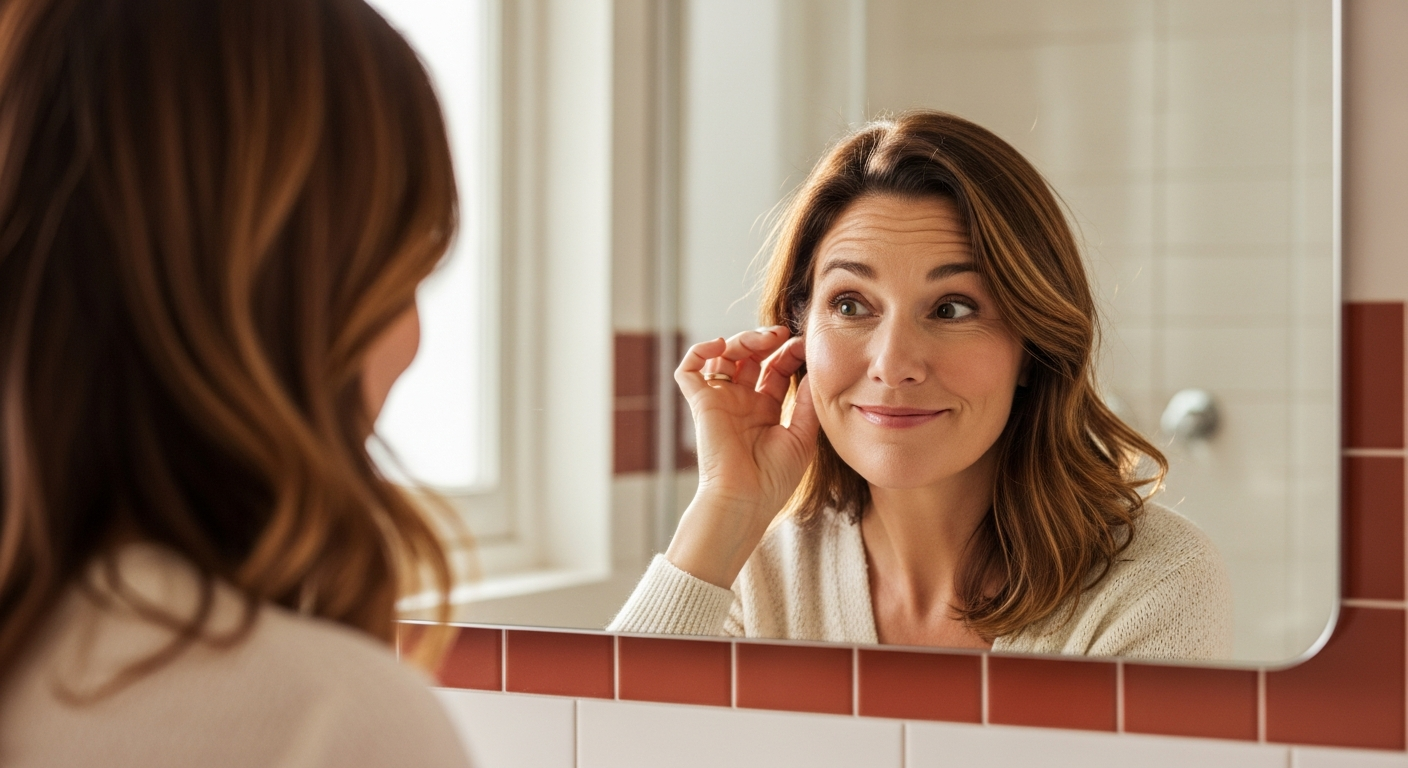
Woman in her 50s at a bathroom mirror, lightly touching her ear with a bemused smile

Of all the symptoms women whisper about in midlife forums, this one wins the "wait, that's a thing?" award: relentlessly itchy ears. It sounds too random to be hormonal. It isn't — and once you hear the explanation, it makes almost annoying amounts of sense.

The skin story

Estrogen supports skin everywhere — its collagen, its oil production, its ability to hold moisture. As levels shift through the transition, skin commonly becomes drier, thinner, and more easily irritated. Most women expect that on the face and hands. What nobody mentions: the ear canal is lined with skin too — some of the thinnest, most sensitive skin on the body. Dry it out and it does what dry skin does everywhere: it itches.

Ear-canal skin also produces cerumen — earwax — which is part of the ear's own moisturizing and protection system. Changes in skin oil production can mean drier, flakier wax and a less-protected canal. Result: an itch that lives somewhere a moisturizer can't easily go.

The scratching trap

  • Cotton swabs and fingernails scratch the canal's delicate skin — micro-scrapes itch more as they heal, inviting more scratching
  • Swabs also push wax deeper, compacting it against the eardrum
  • Over-cleaning strips what natural oil remains — the canal gets drier, not cleaner
  • Broken skin in a warm, dark canal is an invitation for infection — the upgrade nobody wants

What many women find helps

The theme is gentle and boring: keep objects out of the canal entirely, let water rinse the outer ear in the shower and dry it softly, and treat the itch as a skin condition rather than a hygiene problem. If dryness seems system-wide — skin, eyes, ears — that whole pattern is worth mentioning to your doctor, because it commonly travels together in the transition.

When it's more than dryness

Itching with pain, discharge, odor, hearing changes, or a blocked feeling isn't a dryness story — that's ear infection or wax impaction territory, and a clinician can see in minutes what you can't see at all. Persistent scaly itching can also be eczema or psoriasis of the canal, which has its own treatments. The ear is one place where "have someone look" is almost always the efficient move: the exam is fast, and guessing blind is how swabs end up making everything worse.

Questions to bring to your doctor

This article is educational — it can't tell you what's happening in your body. These questions can start that conversation with someone who can.

  • Could my itchy ears be part of the skin dryness of the menopause transition?
  • Can you check for infection, eczema, or wax buildup?
  • Are there drops or treatments appropriate for my ear canal skin?
  • I've noticed other dryness too — should we look at that pattern together?

Wondering where you are in your journey?

Take our 3-minute educational assessment and get a personalized picture of your symptoms — plus questions to bring to your doctor.

Take the quiz

Frequently asked questions

Can perimenopause cause itchy ears?

Yes — it's a commonly reported and rarely discussed symptom. Estrogen supports skin moisture and oil production, and the ear canal is lined with some of the body's thinnest skin. As hormone levels shift, that skin commonly gets drier and itchier, and earwax can become drier and flakier too.

Why do my ears itch at night?

Many people notice itch more at night simply because there's less distraction, and warmth under bedding can amplify skin itch generally. If night itching comes with pain or drainage, that points away from simple dryness and toward something a clinician should examine.

What helps itchy ears in perimenopause?

Keeping cotton swabs and fingernails out of the canal, letting shower water rinse the outer ear, and treating it as dry skin rather than a hygiene problem. If itching persists, a clinician can look inside, rule out infection or eczema, and suggest appropriate drops or treatments.

When should I see a doctor about itchy ears?

If itching comes with pain, discharge, odor, hearing changes, or a blocked sensation — or if it simply persists despite hands-off care. An ear exam is quick, and conditions like infection, wax impaction, and canal eczema are all very manageable once seen.

Menopause Club content is educational only — not medical advice, diagnosis, or treatment, and never a substitute for care from a qualified clinician.