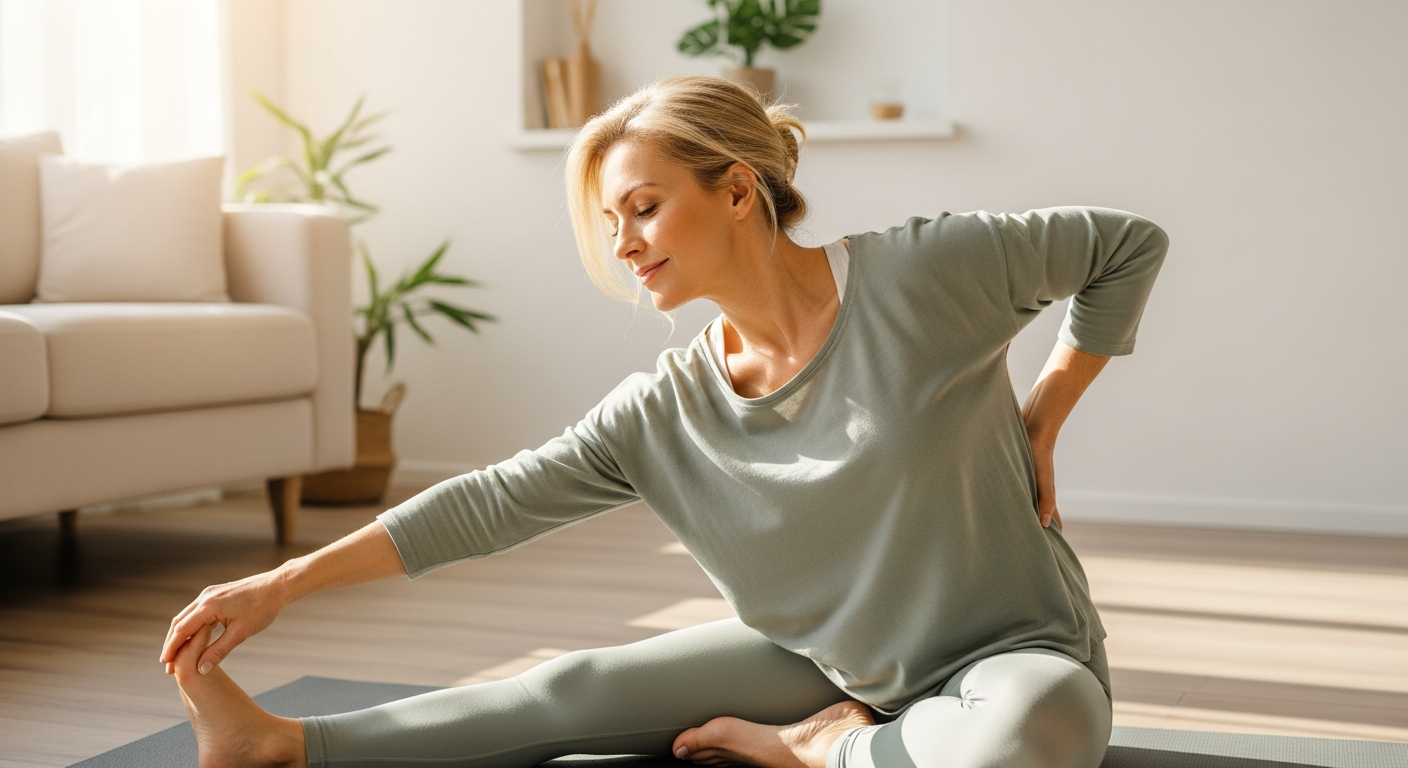
When women in the transition are asked what genuinely helps day to day, movement shows up near the top of almost every list. Not marathon training — movement. Walks that happen. Stretching that actually gets done. Strength work measured in kitchen counters push-offs, not gym memberships.
Why movement earns its reputation
Regular activity is commonly associated with steadier mood, better sleep, and more reliable energy — three of the areas women most often say the transition disrupts. Strength-building activity has a special place in midlife: muscle and bone naturally change through these years, and staying strong supports everything from metabolism to balance to confidence. None of this is a cure for symptoms, and we won't pretend otherwise — but as a foundation, it's hard to beat.
What sticking with it actually looks like
- Choosing frequency over intensity — a 15-minute daily walk that happens beats a workout plan that doesn't
- Anchoring movement to something existing: after coffee, during a call, before the school run
- Adding simple strength work twice a week — bodyweight counts, and so do resistance bands
- Recruiting company; many women say a walking partner is the difference between intention and habit
- Treating it as care, not punishment — the goal is feeling steadier, not shrinking
If you're starting fresh, have joint pain, or have any health conditions, a quick conversation with your doctor about what's right for you is a smart first step. And if you track your symptoms with us, watch what happens to your sleep and mood scores in the weeks after movement becomes regular — many members find that seeing the pattern is what makes the habit stick.